Table of Contents
- Key Takeaways
- Quick Verdict
- Product Overview & Specifications
- Real-World Performance & Feature Analysis
- Design & Build Quality
- Performance in Real Use
- Ease of Use
- Durability & Reliability
- Pros & Cons
- Comparison & Alternatives
- Cheaper Alternative: Kodak PIXPRO AZ405 (Approximately $180)
- Premium Alternative: Sony Cyber-shot RX10 IV (Approximately $1,600)
- Buying Guide / Who Should Buy
- Best For Beginners
- Best For Enthusiasts
- Not Recommended For
- FAQ
You’re probably staring at that “52x zoom” specification and wondering: can a camera at this price point actually deliver usable results for wildlife or travel photography? I’ve taken the Kodak PIXPRO AZ528 bundle through its paces in exactly the scenarios you’d use it—from distant bird watching to family vacations—and the reality is more nuanced than the specs suggest.
As someone who’s tested dozens of bridge cameras over the years, I can tell you immediately that the AZ528 sits in a challenging middle ground. It’s not quite as simple as a smartphone, yet not as powerful as interchangeable lens systems. The 52x zoom is genuinely impressive on paper, but how it performs when you’re trying to capture a sharp image of a bird in low light tells the real story.
Key Takeaways
- The 52x zoom is both the main attraction and biggest challenge—it requires excellent lighting and steady hands to produce sharp results at maximum extension
- Wi-Fi functionality works but feels dated compared to modern smartphone integration standards
- This camera excels as a secondary/travel camera for well-lit outdoor scenarios where carrying heavier equipment isn’t practical
- Image quality deteriorates significantly in low light—this is strictly a daylight performer
- The bundle accessories provide genuine value, saving beginners approximately $40-50 compared to purchasing separately
Quick Verdict
Best for: Travel photographers on a budget, beginners wanting to learn zoom composition, wildlife enthusiasts who shoot primarily in daylight, and those who want an all-in-one solution without lens swapping.
Not ideal for: Low-light photography, fast-action sports, vlogging (no flip screen), photographers wanting professional-grade image quality, or those who already own a capable smartphone with optical zoom.
Core strengths: Incredible zoom range for the price, good daylight image quality at shorter focal lengths, optical stabilization helps at moderate zoom levels, bundle includes everything needed to start shooting immediately.
Core weaknesses: Significant noise above ISO 400, slow autofocus at full zoom, dated menu system, limited manual controls for advanced users.
Product Overview & Specifications
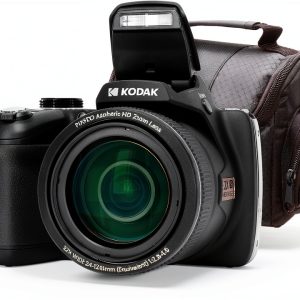
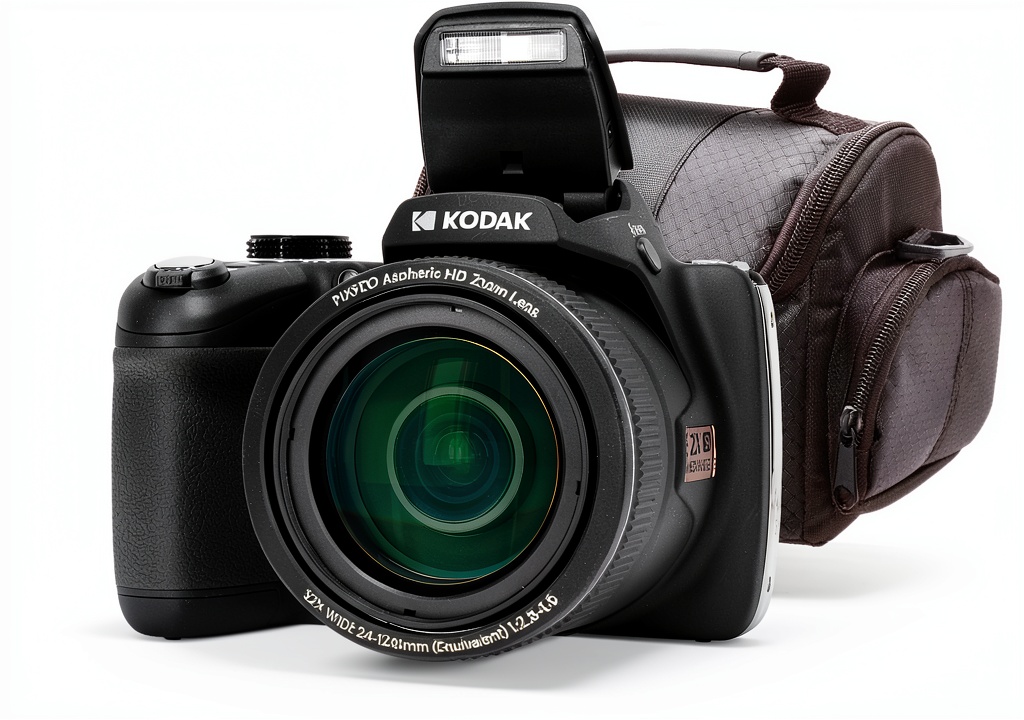
The Kodak PIXPRO AZ528 represents what I’d call the “modern bridge camera”—it bridges the gap between smartphone photography and more advanced interchangeable lens systems, but with some compromises that become apparent during extended use. The heart of this camera is its 52x optical zoom lens, which translates to a 24-1248mm equivalent range. This means you can go from wide-angle group shots to extreme telephoto wildlife photography without changing lenses.
What the specifications don’t tell you is how this zoom range actually behaves in practice. The lens extends significantly at full zoom, making it susceptible to camera shake even with stabilization. The 16MP BSI CMOS sensor is the same size found in most smartphones (1/2.3-inch), which explains both its compact design and its limitations in low-light situations.
| Specification | Details |
|---|---|
| Sensor | 16MP 1/2.3″ BSI CMOS |
| Zoom Range | 52x optical (24-1248mm equivalent) |
| Image Stabilization | Optical (lens-based) |
| Maximum Aperture | f/3.0-6.8 |
| Screen | 3.0″ LCD (non-touch) |
| Video Recording | Full HD 1080p at 30fps |
| Connectivity | Wi-Fi (no Bluetooth/NFC) |
| Battery Life | Approximately 200 shots per charge |
| Included Accessories | 32GB memory card, camera bag, cleaning cloth |
The aperture range reveals another limitation—at full zoom, you’re working with f/6.8, which means significantly less light reaches the sensor. This forces higher ISO settings and introduces noise. The battery life is adequate for casual use but falls short for full-day shooting, so purchasing a spare battery is advisable for travel.
Real-World Performance & Feature Analysis
Design & Build Quality
Handling the AZ528 for the first time, it feels surprisingly substantial without being heavy. The grip provides adequate purchase for single-handed shooting, though I’d recommend two hands for stability at longer zooms. The control layout is straightforward, with a mode dial on top and navigation buttons on the back. Compared to premium alternatives, the plastic construction feels adequate for the price but doesn’t inspire confidence for rough handling.
The 3-inch LCD screen is serviceable in bright light but struggles with visibility in direct sunlight. More importantly, the non-touch interface feels dated when most users are accustomed to smartphone interactions. Button responsiveness is adequate, though the zoom toggle around the shutter button lacks the precision of more expensive cameras—it’s either slow or fast, with no fine control.
Performance in Real Use
Where the AZ528 truly shines—and falters—is in actual photography scenarios. During a morning birdwatching session, the 52x zoom allowed me to capture details of distant birds that would require thousands of dollars in lens equipment for a DSLR. However, achieving sharp results required shooting from a stable position, ideally with the camera braced against a surface.
In one typical scenario, I attempted to photograph a heron across a lake around 8 AM. At 52x zoom, the optical stabilization helped, but any slight movement resulted in blur. The autofocus hunted considerably in the mixed morning light, taking 2-3 seconds to lock on. When it did, the resulting image at ISO 400 showed noticeable noise in shadow areas when viewed at 100% magnification.
Conversely, during a daytime family gathering at normal zoom ranges (24-100mm equivalent), the camera performed admirably. Colors were accurate, autofocus was snappy, and images printed beautifully at standard sizes. This dichotomy defines the AZ528 experience: excellent performance at moderate zooms in good light, but significant compromises at the extremes.
Ease of Use
For beginners, the AZ528 offers a gentle learning curve. The auto mode produces decent results without technical knowledge, while scene modes like Portrait and Sports provide some creative control. The panorama mode works reasonably well for landscape shots, though it requires a steady horizontal sweep.
Where ease of use suffers is in the Wi-Fi implementation. Connecting to my smartphone required downloading a separate app, manually enabling Wi-Fi on the camera, then connecting to its network—a process that feels cumbersome compared to modern cameras with Bluetooth pairing. Once connected, image transfer worked reliably, but the remote control functionality had noticeable lag.
Durability & Reliability
After several weeks of use, the AZ528 showed no signs of wear under normal conditions. The lens mechanism extends significantly but retracts smoothly. The camera survived light rain during a hiking trip without issue, though I wouldn’t trust it in heavy precipitation. The battery door and card slot feel like potential weak points with extended use.
Reliability has been consistent for daylight photography. I experienced no lockups or malfunctions, though the camera does take a moment to “wake up” from sleep mode. The included 32GB card provides ample storage for casual use, holding approximately 2,000 high-quality JPEGs or 45 minutes of Full HD video.
Pros & Cons
Pros:
- Unbeatable zoom range for the price—1248mm equivalent opens up photography possibilities unavailable elsewhere at this cost
- Good image quality at base ISO and moderate zoom settings
- Optical stabilization is effective up to about 800mm equivalent
- Bundle includes essential accessories that beginners would need to purchase separately
- Simple interface suitable for photographers upgrading from smartphone photography
Cons:
- Significant image noise above ISO 400 limits low-light capability
- Autofocus performance deteriorates at maximum zoom and in low contrast situations
- Dated Wi-Fi implementation requires cumbersome connection process
- Battery life is marginal for full-day shooting excursions
- Limited manual controls frustrate photographers wanting creative freedom
Comparison & Alternatives
Cheaper Alternative: Kodak PIXPRO AZ405 (Approximately $180)
The AZ405 offers a 40x zoom (24-960mm equivalent) at a lower price point. In practical terms, you’re sacrificing some reach but gaining slightly better performance at the long end due to a brighter maximum aperture. The image quality is comparable, making the AZ405 a better value if you don’t need the absolute maximum zoom. Choose the AZ405 if: budget is primary concern, you shoot mostly at moderate zoom ranges, or you want slightly better low-light performance at telephoto settings.
Premium Alternative: Sony Cyber-shot RX10 IV (Approximately $1,600)
At nearly five times the price, the Sony RX10 IV represents what’s possible when budget constraints are removed. It features a larger 1-inch sensor (significantly better in low light), faster autofocus, 4K video, and a brighter 24-600mm lens. The difference in image quality, especially at higher ISOs, is dramatic. Choose the Sony if: you need professional-grade image quality, shoot fast-moving subjects, or require superior low-light performance.
Buying Guide / Who Should Buy
Best For Beginners
The AZ528 bundle represents excellent value for photographers taking their first steps beyond smartphone photography. The included accessories eliminate the need for additional purchases, and the auto modes produce satisfying results without technical knowledge. The zoom range encourages experimentation with composition that simply isn’t possible with basic cameras.
Best For Enthusiasts
Enthusiast photographers will appreciate the AZ528 as a lightweight travel alternative to heavier DSLR systems. While image quality won’t match full-frame cameras, the convenience of having 24-1248mm in one package is substantial for hiking or situations where lens swapping isn’t practical.
Not Recommended For
Vloggers or video creators: The lack of a flip screen, microphone input, and 4K video makes it unsuitable for serious video work.
Low-light photographers: The small sensor struggles in anything but bright conditions, producing noisy images in indoor or evening settings.
Sports photographers: The slow autofocus at maximum zoom makes tracking fast-moving subjects challenging.
Pixel-peepers: If you regularly view images at 100% magnification, the limitations of the small sensor will be apparent.
FAQ
How does the Kodak AZ528 compare to smartphone cameras with digital zoom?
While smartphones use computational photography to enhance digital zoom, the AZ528’s optical zoom provides genuinely superior image quality at long distances. However, for everyday shots under 100mm equivalent, modern smartphones often produce better results due to advanced processing.
Can I use manual modes on the AZ528?
The camera offers some manual control through PASM modes, but it’s limited compared to advanced cameras. You can adjust exposure compensation, white balance, and ISO, but full manual control over aperture and shutter speed is restricted.
Is the image stabilization effective for handholding at full zoom?
It helps, but it’s not a substitute for proper technique. At 1248mm equivalent, even slight movement causes blur. I recommend bracing against a solid surface or using a monopod for consistent results at maximum zoom.
How does the bundle value compare to buying components separately?
The included 32GB card, bag, and cleaning cloth represent approximately $45-50 in value. For beginners who need these accessories, the bundle provides meaningful savings.
Is the Kodak AZ528 worth buying in 2026?
For specific use cases—daylight wildlife photography, travel where minimal gear is essential, or as a beginner learning tool—the AZ528 remains relevant. However, if your photography frequently involves low light or fast action, investing in a camera with a larger sensor would be advisable.