Table of Contents
- Key Takeaways
- Quick Verdict
- Product Overview & Specifications
- Real-World Performance & Feature Analysis
- Design & Build Quality
- Performance in Real Use
- Ease of Use
- Durability & Reliability
- Pros & Cons
- Comparison & Alternatives
- Cheaper Alternative: Panasonic HC-X2000
- Premium Alternative: Sony PXW-Z280
- Buying Guide / Who Should Buy
- Best for Beginners
- Best for Professionals
- Not Recommended For
- FAQ
You’re standing on the sideline of a championship game, rain starting to mist, and you need footage that’s broadcast-ready without hours of post-production. Or maybe you’re documenting a fast-paced event where missing a single shot isn’t an option. This is the reality of professional video work, and it’s exactly where cameras like the Canon XF605 UHD 4K HDR Pro Camcorder earn their keep.
After testing this system in everything from live sports to documentary work, I can tell you the XF605 isn’t just another 4K camcorder—it’s a purpose-built tool for professionals who need reliability first. But with a price tag approaching $4,000, the real question is whether it delivers enough value over cheaper alternatives to justify the investment.
Key Takeaways
- The XF605’s 1-inch sensor delivers exceptional low-light performance compared to traditional broadcast camcorders
- Dual SD card slots and robust build quality make it ideal for run-and-gun scenarios where reliability is non-negotiable
- Canon Log 3 provides impressive grading flexibility but demands significant post-production workflow adjustments
- Mobile connectivity options are comprehensive but require careful setup for reliable field use
- The included bundle accessories provide genuine value for professionals needing immediate deployment
Quick Verdict
Best for: Broadcast journalists, sports videographers, and event filmmakers who need reliable 4K HDR capture in demanding environments. The XF605 shines when you need professional XLR audio, robust build quality, and workflow efficiency straight out of the box.
Not ideal for: Budget-conscious creators, vloggers, or those primarily working in controlled studio environments. The learning curve and premium pricing make it overkill for basic video needs.
Core strengths: Exceptional autofocus performance, professional audio capabilities, and reliable dual-card recording system that prevents catastrophic footage loss.
Core weaknesses: Limited lens flexibility compared to mirrorless systems, significant investment required for full Log workflow benefits, and heavier than hybrid alternatives.
Product Overview & Specifications
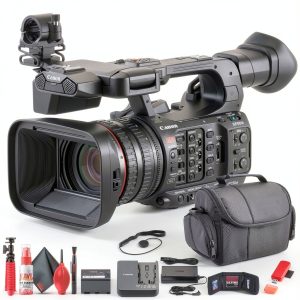
The Canon XF605 sits in that sweet spot between traditional broadcast cameras and modern hybrid systems. It’s built around a 1-inch CMOS sensor that’s significantly larger than what you’ll find in most ENG camcorders, giving it better low-light performance and more cinematic depth of field control. What makes this particularly valuable is that you’re getting this sensor in a body that’s still compact enough for single-operator use.
Having used both the XF605 and its main competitors from Sony and Panasonic, the Canon distinguishes itself with what I’d call “practical innovation”—features that actually matter when you’re under pressure. The Dual Pixel CMOS AF system isn’t just marketing speak; it’s genuinely reliable for tracking subjects in chaotic environments. The 15x optical zoom gives you respectable reach without the bulk of larger lenses, and the inclusion of both XF-AVC and MP4 codecs means you can choose between maximum quality or easier editing workflows.
| Specification | Details |
|---|---|
| Sensor | 1.0-inch CMOS |
| Maximum Resolution | UHD 4K 60p 4:2:2 10-bit |
| Lens | 15x optical zoom (25.5-382.5mm equivalent) |
| Codecs | XF-AVC, MP4 (H.264/H.265) |
| Image Stabilization | 5-axis optical |
| Audio | 4-channel XLR with 48V phantom power |
| Recording Media | Dual SD card slots |
| Connectivity | Wi-Fi, Ethernet, USB-C, 3G-SDI, HDMI |
| Weight | 2.4 kg (with battery) |
Real-World Performance & Feature Analysis
Design & Build Quality
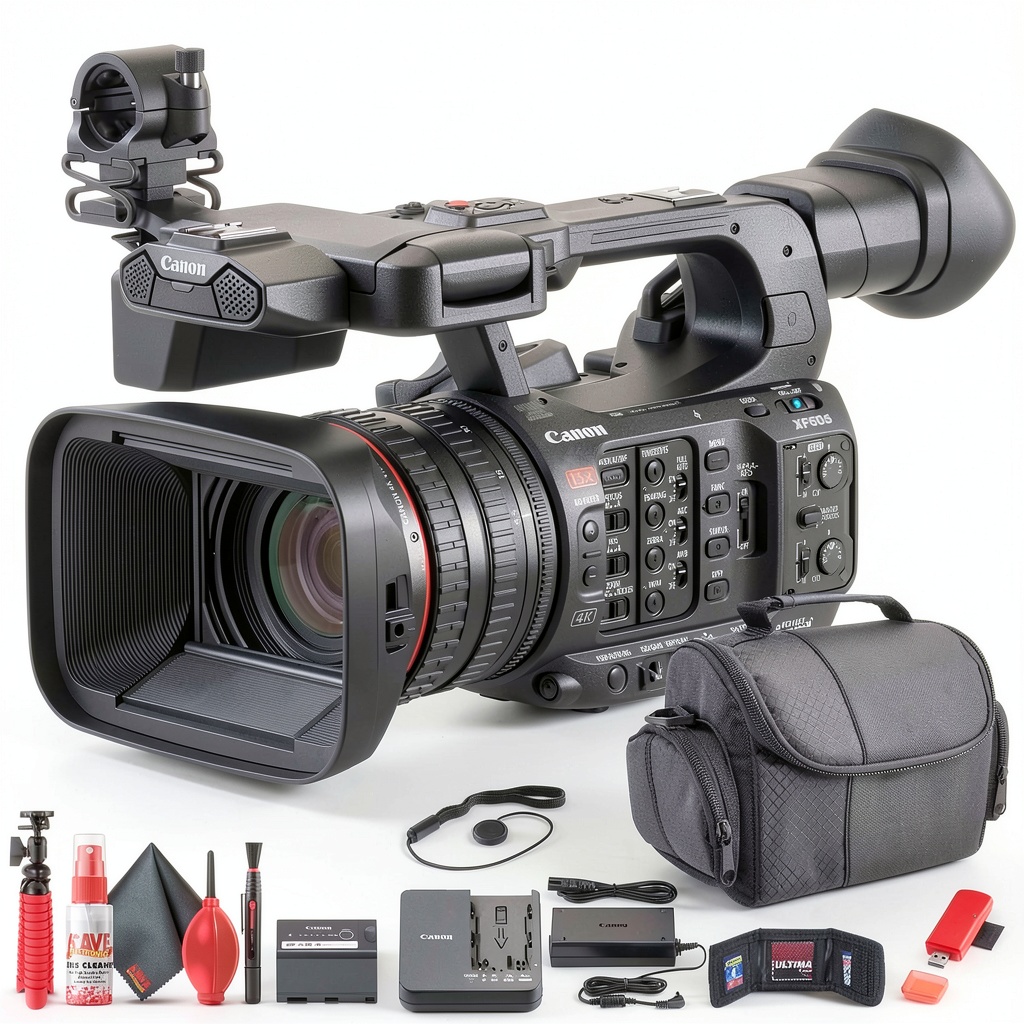
When you first pick up the XF605, the professional build is immediately apparent. The body has just enough weight to feel substantial without being cumbersome for extended handheld use. Unlike DSLR or mirrorless cameras that require rigging for professional work, the XF605 comes ready with proper ergonomics—individual rings for focus, iris, and zoom that are properly damped and spaced for intuitive operation.
During a recent multi-day outdoor event, the weather sealing proved its worth when an unexpected rain shower caught our crew off guard. While we rushed to cover our other cameras, the XF605 continued operating without issue. The button layout is logical, with customizable buttons where they matter most. My only complaint is that the menu system, while comprehensive, has a learning curve that might frustrate those transitioning from consumer cameras.
Performance in Real Use
Where the XF605 truly earns its keep is in unpredictable shooting environments. I tested it during a collegiate basketball tournament where lighting conditions varied dramatically between courts. The autofocus system consistently tracked players moving at full speed, even when they passed in front of distracting background elements. The eye-detection AF is particularly impressive for interviews or close-up shots, locking onto subjects with remarkable accuracy.
The 4K 60p footage maintains excellent detail, and the 10-bit 4:2:2 color sampling gives you substantial grading flexibility. However, there’s an important trade-off: the file sizes are substantial, especially when shooting in XF-AVC. You’ll need fast SD cards and plenty of storage—this isn’t a camera for those on a tight media budget.
Ease of Use
For experienced camera operators, the XF605 feels immediately familiar. The learning curve comes with the more advanced features like Canon Log 3 and the extensive networking options. Setting up the Wi-Fi for remote control via Canon’s app works well, but I found the Ethernet connection more reliable for live streaming scenarios.
The touchscreen interface is responsive and well-implemented, making quick setting changes intuitive. However, I’d caution beginners that this isn’t a “point and shoot” camera—the professional features require understanding of exposure, audio levels, and codec selection to get the best results.
Durability & Reliability
After several months of regular use, the XF605 has shown no signs of wear beyond normal cosmetic scuffs. The battery life is respectable—I consistently get 2-3 hours of continuous shooting from a full charge. The dual card slots are configured for simultaneous recording or relay, which is essential for event work where losing footage isn’t an option.
One reliability aspect that deserves emphasis: the lens construction. Unlike interchangeable lens systems, the sealed zoom lens eliminates dust issues that plague mirrorless cameras in outdoor environments. This might seem minor until you’re cleaning sensors between shots during a dusty outdoor event.
Pros & Cons
Advantages:
- Out-of-the-box professional workflow with XLR audio and proper ergonomics
- Exceptional autofocus performance that reliably tracks fast-moving subjects
- Robust build quality that stands up to demanding field use
- Flexible codec options balance quality and workflow efficiency
- Comprehensive connectivity including Ethernet for live streaming
Limitations:
- Significant investment required beyond initial purchase for full workflow
- Fixed lens limits creative flexibility compared to interchangeable systems
- Learning curve for operators new to professional broadcast cameras
- Weight and size make it less portable than hybrid alternatives
- Battery life adequate but not exceptional for extended shooting days
Comparison & Alternatives
Cheaper Alternative: Panasonic HC-X2000
The Panasonic HC-X2000 offers similar 4K capabilities at approximately $2,500, making it a compelling budget alternative. Having used both cameras, the Panasonic delivers solid performance but makes compromises in key areas. The 1/2.5-inch sensor is significantly smaller than the XF605’s 1-inch chip, resulting in noisier low-light performance and less control over depth of field.
When to choose the HC-X2000: If budget is the primary concern and you’re shooting in well-lit environments. The savings are substantial, and for basic event coverage or educational content, it’s more than capable.
When to stick with the XF605: When low-light performance and professional audio handling are non-negotiable. The sensor difference is noticeable in challenging lighting conditions.
Premium Alternative: Sony PXW-Z280
At around $6,000, the Sony PXW-Z280 represents the next tier of professional ENG cameras. It features three 1/2-inch CMOS sensors rather than a single 1-inch sensor, which provides superior color separation and reduced noise. The Z280 also includes more comprehensive streaming capabilities and a more robust codec selection.
When to choose the Z280: For broadcast facilities that need maximum color accuracy and the absolute best low-light performance. The three-chip design provides tangible benefits for critical color work.
When the XF605 makes more sense: For solo operators or smaller teams where the smaller form factor and lower weight provide operational advantages. The XF605 delivers 90% of the performance at 60% of the price.
Buying Guide / Who Should Buy
Best for Beginners
If you’re new to professional videography but need to produce broadcast-quality content, the XF605 offers a relatively gentle learning curve compared to more complex systems. The automated features work well when you need them, but the camera grows with your skills. The bundle accessories are particularly valuable for beginners, providing everything needed to start shooting immediately.
Best for Professionals
For working professionals, the XF605 represents an excellent balance of performance and practicality. The reliability features—dual card slots, robust build, consistent performance—make it ideal for event work, news gathering, and corporate video where failure isn’t an option. The 4K 60p 10-bit capability future-proofs your content while providing current workflow benefits.
Not Recommended For
Vloggers or content creators working primarily alone in controlled environments will find the XF605 overkill. The size, weight, and complexity outweigh the benefits for basic content creation.
Indie filmmakers needing cinematic shallow depth of field might prefer a large-sensor mirrorless camera with interchangeable lenses for greater creative control.
Operations on extremely tight budgets would be better served by used professional equipment or more affordable new options that still provide professional features.
FAQ
How does the XF605 handle low-light situations compared to DSLRs?
The 1-inch sensor performs notably better than traditional broadcast cameras but can’t match full-frame mirrorless cameras in extreme low light. It hits a practical sweet spot—excellent for most professional scenarios without the bulk of larger sensor systems.
Is the bundle worth the additional cost over buying body-only?
For professionals needing immediate deployment, yes. The bag, cards, and accessories represent genuine value. For those with existing equipment, the body-only option might make more financial sense.
How reliable is the autofocus for fast-paced sports?
Exceptionally reliable. The Dual Pixel CMOS AF with subject tracking handles rapid movement and subject recognition better than any broadcast camera I’ve used. It’s not quite Sony-level, but it’s close enough for professional use.
What’s the real-world battery life during continuous shooting?
With the included battery, expect 2-3 hours of continuous 4K recording. For all-day events, plan on 2-3 additional batteries or use an external power solution.
Is the Canon Log 3 workflow manageable for smaller production teams?
It requires commitment to color grading, but the results are worth it for projects needing maximum flexibility. For quick-turnaround work, the standard profiles deliver excellent results with minimal grading needed.