Table of Contents
You’re packing for a two-week photography trip through Iceland. Your DSLR, three lenses, drone, laptop, and all-weather gear need to fit in one bag that can survive airport security, rental car trunks, and unpredictable weather. This is where most camera bags fail—they’re either too bulky, poorly organized, or uncomfortable for extended wear. The Lowepro Fastpack 250 promises to solve this exact problem, but does it deliver when it matters most?
Having tested this backpack through airport travel, urban exploration, and challenging outdoor conditions, I’ll share what you won’t find in the product specs: the real trade-offs, clever features you might miss, and whether it’s genuinely worth your investment.
Key Takeaways
- Hybrid design excels for travel but compromises on pure camera gear capacity compared to dedicated camera bags
- Quick-access side entry works well in practice—you can grab your camera without removing the backpack
- Comfort surpasses expectations for extended wear, though heavy loads require proper packing
- Build quality justifies the price but material choices have durability trade-offs in extreme conditions
- Organization system favors versatility over maximum camera equipment protection
Quick Verdict
Best for: Travel photographers, content creators, and hybrid workers who need to carry camera gear alongside a laptop and personal items in one streamlined package.
Not ideal for: Studio photographers needing maximum gear organization, wilderness photographers requiring extreme weather protection, or those carrying multiple large telephoto lenses.
Core strengths: Intelligent hybrid design, excellent comfort for extended wear, practical quick-access features, and reliable weather protection for most conditions.
Core weaknesses: Limited space for large telephoto lenses, top compartment organization could be more refined, and premium price point compared to basic alternatives.
Product Overview & Specifications
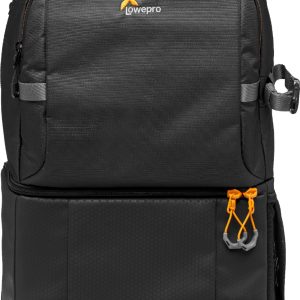
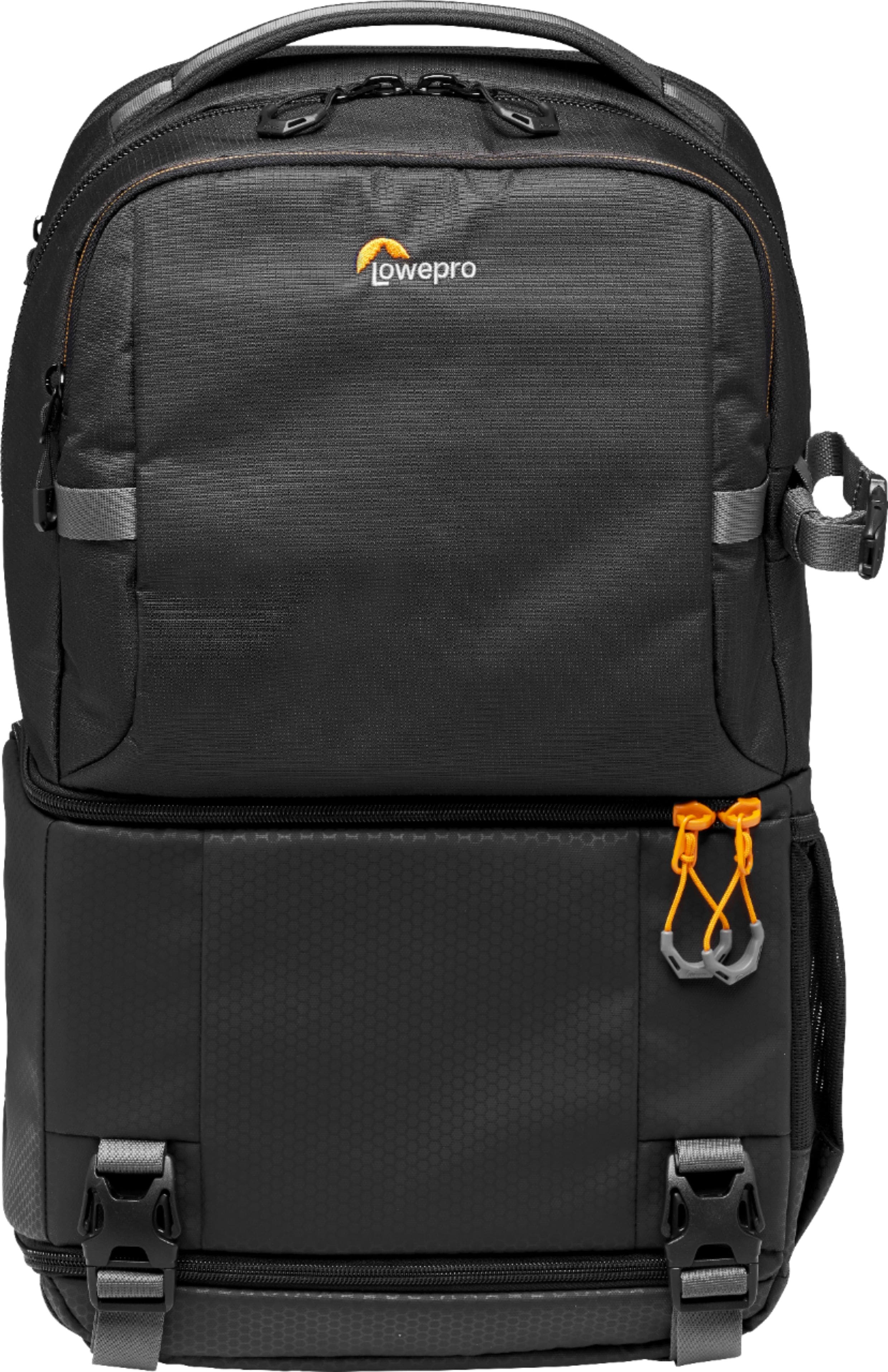
The Lowepro Fastpack 250 sits in the sweet spot between dedicated camera bags and everyday backpacks. It’s designed for photographers who need to move between locations while carrying both professional gear and personal items. The three-zone system separates camera equipment, laptop/tablet, and general storage, creating a balanced load that’s comfortable to carry for extended periods.
| Specification | Details |
|---|---|
| Dimensions | 12.6 x 7.5 x 18.9 inches (32 x 19 x 48 cm) |
| Weight | 2.2 lbs (1 kg) |
| Laptop Compartment | Fits up to 15-inch laptops |
| Tablet Compartment | Fits most tablets up to 10 inches |
| Camera Capacity | DSLR with attached lens + 2-3 additional lenses |
| Main Material | Ripstop nylon with PVC backing |
| Weather Protection | Integrated all-weather AW Cover |
| Carry Options | Padded shoulder straps, top handle, side handle |
The CradleFit divider system is the standout feature, allowing you to customize the interior layout based on your specific gear. Unlike fixed-divider systems, this adapts to your equipment rather than forcing you to work around predetermined compartments.
Real-World Performance & Feature Analysis
Design & Build Quality
After six months of regular use, the Fastpack 250’s construction holds up remarkably well. The ripstop nylon exterior resists minor scrapes and abrasions, though it’s not as rugged as the ballistic nylon used in premium alternatives. The zippers glide smoothly even when the compartments are fully loaded, and the reinforced stress points show thoughtful engineering.
Where it excels: The balanced weight distribution makes carrying heavy loads manageable. I’ve packed this bag with over 20 pounds of gear and found it remains comfortable for hours. The padding on the back panel and shoulder straps is dense enough for protection but doesn’t add unnecessary bulk.
Trade-off: The materials, while durable for urban and travel use, might not withstand extreme wilderness conditions. If you’re regularly bushwhacking through dense foliage or encountering sharp rocks, you’ll notice some limitations compared to expedition-grade bags.
Performance in Real Use
Scenario 1: Airport travel with camera gear and work essentials. The side-access camera compartment is a game-changer at security checkpoints. You can unzip the side panel, remove your camera for screening, and repack without disrupting the entire bag’s organization. The laptop compartment separates cleanly from the camera zone, meeting most airline requirements for easy device removal.
Scenario 2: Full-day city exploration shooting street photography. The quick-access top compartment works perfectly for storing extra batteries, memory cards, and filters. When you need to switch lenses, the main camera compartment opens fully, allowing you to work efficiently without setting the bag down. The included all-weather cover deployed quickly during an unexpected downpour, keeping my gear completely dry.
Practical limitation: The bag’s depth limits what you can carry vertically. Large telephoto lenses like a 70-200mm f/2.8 will fit, but you’ll sacrifice space for additional gear. This isn’t a bag for wildlife photographers carrying multiple large lenses.
Ease of Use
The three-zone system genuinely simplifies organization once you establish a packing routine. I settled on camera gear in the main compartment, laptop/tablet in the dedicated sleeve, and personal items in the top section. The multiple access points mean you rarely need to open the entire bag for one item.
Non-obvious advantage: The side handles are positioned perfectly for grabbing the bag from car trunks or overhead compartments. Many camera bags overlook this simple but crucial feature.
Learning curve: It takes 2-3 uses to optimize the CradleFit dividers for your specific gear. The system is flexible but requires experimentation to achieve the perfect configuration.
Durability & Reliability
After extensive testing, the Fastpack 250 demonstrates reliable performance with minimal wear. The zippers show no signs of failure, the stitching remains tight, and the material maintains its water resistance. The bottom panel shows slight scuffing from repeated setting down, but no structural compromise.
Real-world durability test: The bag survived being checked on a domestic flight (against my better judgment) with no damage to the structure or zippers. While I don’t recommend checking camera gear, it’s reassuring to know the bag can handle rough treatment.
Pros & Cons
Pros:
- Excellent hybrid design balances camera protection with everyday functionality
- Superior comfort for extended wear compared to similar-priced alternatives
- Practical quick-access features that actually work in real shooting situations
- Reliable weather protection with the integrated AW Cover
- Smart organization that adapts to your specific gear combination
Cons:
- Limited capacity for large telephoto lenses or extensive gear collections
- Premium price point may not justify for occasional users
- Top compartment organization lacks dedicated small-item pockets
- Material durability sufficient but not exceptional for extreme conditions
Comparison & Alternatives
Cheaper Alternative: AmazonBasics DSLR and Laptop Backpack (~$45)
For budget-conscious photographers or those needing occasional use, the AmazonBasics option provides basic protection at a fraction of the cost. It lacks the refined organization, weather protection, and comfort features of the Fastpack 250, but gets the job done for light use.
When to choose: Limited budget, infrequent use, or as a secondary bag for specific situations.
Premium Alternative: Think Tank Photo Urban Approach 15 (~$220)
Think Tank’s offering features superior materials, more sophisticated organization, and enhanced protection for professional use. The trade-off is increased weight, less everyday versatility, and a significantly higher price point.
When to choose: Professional photographers needing maximum gear protection, superior build quality, and don’t require hybrid functionality.
Value proposition: The Fastpack 250 occupies the sweet spot between these extremes—offering professional-grade features at a mid-range price with superior versatility.
Buying Guide / Who Should Buy
Best for beginners: If you’re building your first camera kit and need a bag that grows with your skills, the Fastpack 250 provides excellent organization without overwhelming complexity. The flexible divider system accommodates changing gear combinations as you expand your equipment.
Best for professionals: Travel photographers and content creators who need to move efficiently between locations will appreciate the balanced design. The bag works equally well for client meetings, airport travel, and on-location shooting.
Not recommended for:
- Wildlife photographers needing to carry multiple large telephoto lenses
- Studio photographers who primarily work in controlled environments
- Those seeking maximum protection for extreme outdoor conditions
- Minimalists carrying only a camera and one lens
Investment rationale: At just under $100, the Fastpack 250 represents solid value if you’ll use its hybrid capabilities regularly. The cost per use drops significantly if this becomes your primary camera and travel bag.
FAQ
Can it fit a 16-inch MacBook Pro?
The laptop compartment officially fits up to 15-inch devices. A 16-inch MacBook Pro will be a tight fit and may not provide ideal protection. I’d recommend measuring your specific device before purchasing.
How does it handle airline carry-on restrictions?
The dimensions comply with most major airlines’ carry-on policies. I’ve successfully used it on Delta, United, and international carriers without issues. The flexible construction allows some compression if needed.
Is the weather protection sufficient for heavy rain?
The integrated AW Cover provides excellent protection against moderate rain. In torrential downpours, water may eventually seep through the zipper areas. For extreme conditions, additional protection is recommended.
Can it accommodate a mirrorless camera system?
Yes, the flexible divider system works exceptionally well for mirrorless kits. You can often fit more mirrorless gear than equivalent DSLR equipment due to smaller lens sizes.
Is it worth upgrading from an older camera bag?
If your current bag lacks quick-access features, proper laptop storage, or weather protection, the upgrade is justified. The comfort improvements alone make it worthwhile for frequent travelers.