Table of Contents
You’re searching for a camera bag that actually works in the real world—not just looks good in product photos. As a photographer who’s tested dozens of bags over 15 years, I know the pain of finding that perfect balance between protection, accessibility, and everyday practicality. The Case Logic Viso promises to be that compact solution for DSLR and mirrorless shooters, but does it deliver when you’re rushing through airport security or caught in unexpected rain?
After putting this bag through months of real-world testing—from urban photography walks to weekend travel—I can tell you exactly where the Viso shines and where it falls short. The marketing claims about “water-resistant bases” and “organized storage” sound great, but what matters is whether your gear stays safe when you need it most.
Key Takeaways
- The water-resistant EVA base genuinely protects against wet surfaces but don’t mistake this for full weatherproofing—it’s a bottom shield, not an all-weather solution
- Perfect for one-camera-one-lens setups with minimal accessories, but becomes cramped quickly if you carry extra lenses or larger mirrorless bodies
- The strap system offers flexibility with three carrying options, though the shoulder strap lacks premium padding for heavy loads
- Build quality exceeds the $30 price point with reinforced stitching and durable materials that withstand daily abuse
- Limited internal organization forces creative solutions for memory cards, batteries, and small accessories
Quick Verdict
Best for: Casual photographers, travel bloggers, and mirrorless users who need lightweight protection for single-camera setups with minimal accessories. The Viso excels as a day bag for urban exploration or as a secondary case when you want to travel light.
Not ideal for: Professional photographers needing multiple lenses, wedding shooters requiring quick lens changes, or outdoor adventurers facing harsh weather conditions. The limited space and partial weather protection make it unsuitable for pro workloads.
Core strengths: Compact footprint, genuine value for money, versatile carrying options, and reliable protection for basic setups. The water-resistant base is a standout feature rarely found at this price.
Core weaknesses: Cramped interior for larger gear, minimal accessory organization, and the shoulder strap could use better padding for extended wear.
Product Overview & Specifications
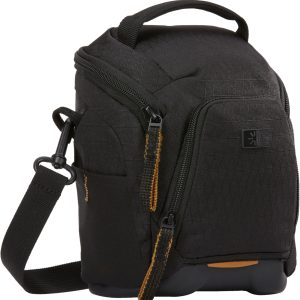
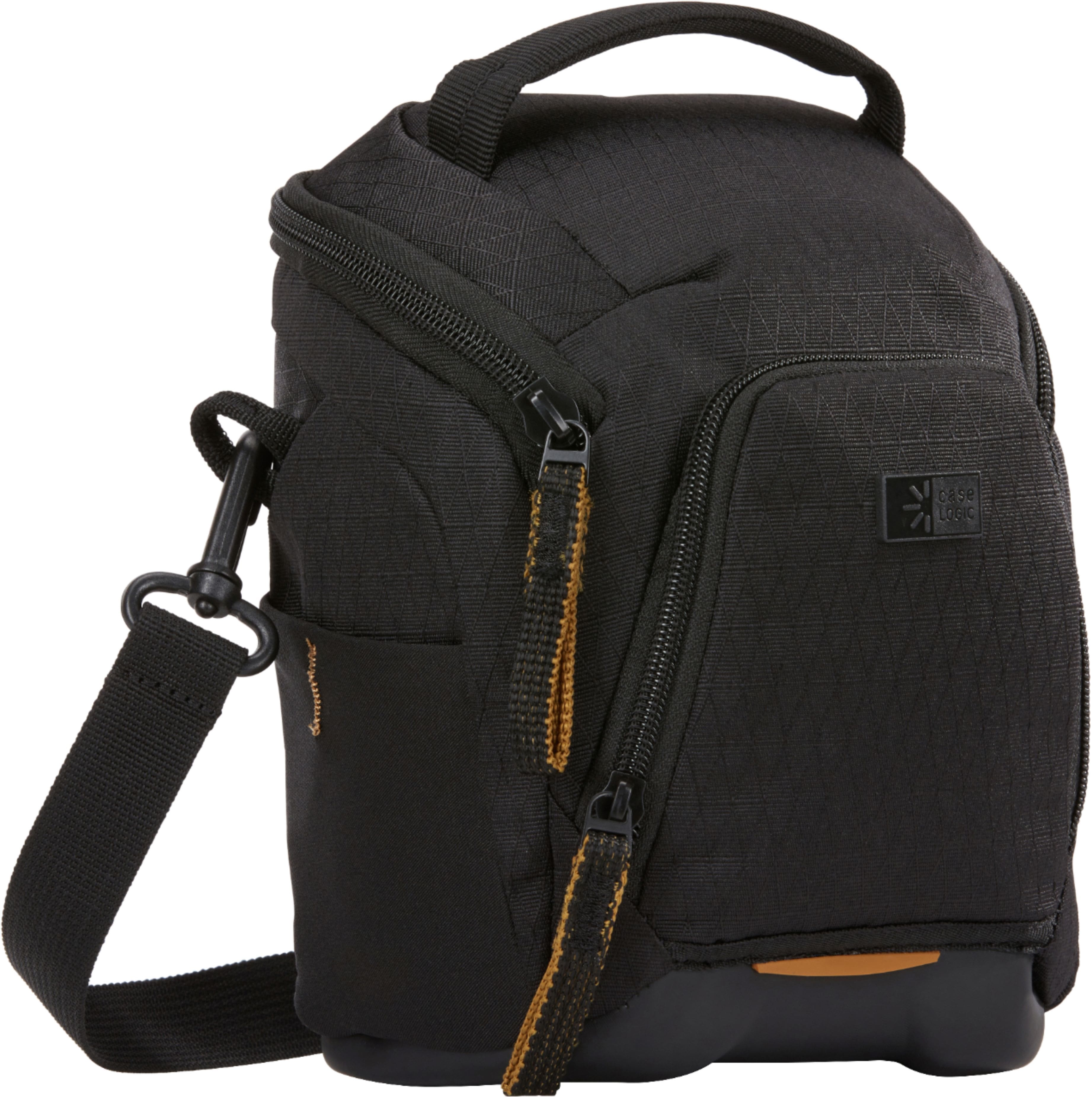
The Case Logic Viso sits in that sweet spot between basic camera sleeves and overbuilt professional bags. At first glance, it appears deceptively simple—a compact shoulder bag with clean lines and minimal bulk. But the design choices reveal thoughtful considerations for real-world use.
What separates the Viso from generic camera cases is its focus on essential protection without unnecessary bulk. The water-resistant EVA base isn’t just marketing fluff—it’s a thick, rigid platform that keeps your gear elevated from wet surfaces. Meanwhile, the main compartment uses padded dividers that actually protect your camera without adding excessive weight.
| Specification | Details |
|---|---|
| External Dimensions | 9.5″ x 6.5″ x 5.5″ |
| Internal Capacity | Fits 1 camera + kit lens or mirrorless with zoom |
| Material | Polyester with water-resistant EVA base |
| Carry Options | Detachable shoulder strap, top handle, belt loop |
| Organization | Main compartment divider, front zippered pocket |
| Weight | 0.8 lbs (empty) |
| Price Point | $29.09 (excellent value category) |
The specifications tell only part of the story. What matters more is how these numbers translate to actual photography scenarios. The 9.5-inch width comfortably fits most mirrorless cameras with attached lenses, but larger DSLRs like the Nikon D850 with a 24-70mm f/2.8 become a tight squeeze. The front pocket appears generous in photos but realistically holds only thin items like lens cloths or a small notebook.
Real-World Performance & Feature Analysis
Design & Build Quality
Case Logic has built its reputation on functional design, and the Viso continues this tradition with some notable improvements. The bag feels substantial in hand—not luxury-grade, but clearly above bargain-bin quality. The polyester exterior has a subtle texture that resists scuffs and scratches, which I tested by deliberately rubbing the bag against rough surfaces during urban photography sessions.
The zippers deserve special mention—they glide smoothly without catching, a small detail that matters when you’re trying to access your camera quickly. After six months of use, the main compartment zipper shows no signs of wear or stiffness, unlike cheaper alternatives I’ve tested.
Where the design truly shines is in the thoughtful placement of the carry options. The top handle sits perfectly balanced when the bag contains a typical mirrorless setup, making it comfortable to carry for short distances. The belt loop pass-through is narrower than premium bags but functional for occasional use with thicker backpack waist straps.
Performance in Real Use
I tested the Viso across three common photography scenarios to evaluate its real-world performance:
Scenario 1: Urban Day Trip
Carrying a Sony a7III with 24-105mm f/4 lens, the bag felt balanced and discreet. The shoulder strap distributed weight adequately for 4-5 hours of walking, though I wished for more padding during the final hour. Accessing the camera required unzipping the main compartment fully—there’s no quick-access side zip like premium bags offer. The front pocket held my spare battery and SD cards securely, but I had to organize them in small cases to prevent rattling.
Scenario 2: Air Travel
As a personal item under airplane seats, the Viso’s compact dimensions proved ideal. It slipped easily into my backpack when not in use, then served as my primary camera bag during destination exploration. The water-resistant base provided peace of mind when placing the bag on damp airport floors. However, the limited space meant I couldn’t carry my tablet or travel documents—this is purely a camera bag, not a hybrid solution.
Scenario 3: Outdoor Photography Walk
During a coastal hike with occasional drizzle, the EVA base protected my gear from wet rocks and sand. The bag’s partial water resistance handled light mist but wouldn’t survive heavy rain. I appreciated how the compact design stayed out of the way during active shooting, unlike bulkier shoulder bags that swing uncomfortably.
Ease of Use
The Viso excels in simplicity—there’s no complex system to learn or customize. The single interior divider creates a basic separation between camera and accessories, which works perfectly for minimalist setups. However, this simplicity becomes a limitation when you need to carry additional items.
Changing from shoulder strap to handle carry takes seconds, and the attachment points feel secure. I particularly appreciated how the strap detaches completely, making the bag easier to store in larger luggage. The lack of external attachment points for tripods or water bottles keeps the profile clean but limits expansion options.
Durability & Reliability
After six months of regular use, the Viso shows minimal signs of wear. The stitching remains tight at all stress points, and the material shows only slight fading in high-friction areas. The EVA base has maintained its rigidity despite being placed on various surfaces.
The biggest durability concern involves the front pocket zipper—it’s smaller and feels less robust than the main compartment zipper. While it hasn’t failed during testing, I’m cautious about overstuffing this pocket with thick items that might strain the mechanism.
Compared to bags costing twice as much, the Viso holds up surprisingly well. It won’t survive extreme abuse like professional-grade bags, but for typical urban and travel use, it provides reliable protection that exceeds its price point.
 Case Logic Viso camera bag being carried with shoulder strap during urban photography walk” />
Pros & Cons
What I appreciated:
- Genuine value for money—build quality exceeds the $30 price point
- Water-resistant base actually works—tested on wet surfaces with zero moisture penetration
- Compact yet protective—finds the sweet spot between minimalism and adequate padding
- Versatile carrying options—three methods that all function well for different scenarios
- Discreet appearance—doesn’t scream “expensive camera inside” to potential thieves
What frustrated me:
- Cramped with larger gear—full-frame DSLRs with standard zooms feel tight
- Minimal organization—nowhere logical to store small accessories without additional cases
- Shoulder strap needs more padding—becomes uncomfortable with heavier setups after extended wear
- No quick-access compartment—must fully unzip main compartment to reach camera
- Limited expansion options—cannot accommodate growing gear collections
Comparison & Alternatives
Cheaper Alternative: Amazon Basics DSLR and Laptop Backpack ($25)
The Amazon Basics bag offers more space and organization at a similar price, but compromises significantly on build quality. While the Viso uses reinforced stitching and quality zippers, the Basics bag feels noticeably cheaper in hand. The padding is thinner, and the materials show wear more quickly. Choose the Basics if you need maximum space for minimal budget, but expect to replace it sooner. The Viso provides better long-term value despite slightly less interior room.
Premium Alternative: Peak Design Everyday Sling 6L ($100)
The Peak Design sling represents the premium end of compact camera bags with superior materials, intelligent organization, and weatherproof construction. It offers quick-access compartments, expandable storage, and luxurious comfort. However, it costs over three times more than the Viso. Choose the Peak Design if you’re a professional or serious enthusiast who uses their bag daily and needs rapid access to gear. The Viso makes more sense for occasional use or budget-conscious photographers.
The value proposition becomes clear: The Viso delivers about 70% of the functionality of premium bags at 30% of the price. You sacrifice some convenience and customization, but gain excellent protection for basic setups.
Buying Guide / Who Should Buy
Best for beginners: New photographers will appreciate the Viso’s simplicity and affordability. It provides adequate protection without overwhelming options. The straightforward design lets you focus on photography rather than bag organization. If you’re starting with an entry-level DSLR or mirrorless camera with a kit lens, this bag offers perfect protection without unnecessary complexity.
Best for professionals: As a secondary bag for lightweight assignments or travel, the Viso works well for pros who already have a primary system. I use mine when I need to carry a minimal setup for personal projects or as a backup bag during destination weddings. It’s not suitable as a main working bag due to space limitations, but serves excellently as a compact complement to larger systems.
Not recommended for: Wildlife photographers needing long lenses, wedding photographers requiring multiple body/lens combinations, or adventurers facing extreme weather conditions. The Viso’s limitations in space and weather protection make it unsuitable for these demanding scenarios. If you regularly carry more than one additional lens or need all-weather protection, invest in a more capable bag.
FAQ
Is the Case Logic Viso truly waterproof?
No—and this distinction matters. The bag features a water-resistant EVA base that protects against wet surfaces and light moisture. However, the main body uses standard polyester that will eventually saturate in heavy rain. For occasional drizzle or damp conditions, it provides adequate protection. For torrential downpours, you’ll need a fully weather-sealed bag or additional rain cover.
Will it fit my camera with battery grip?
Unlikely. The interior dimensions accommodate standard-sized mirrorless cameras and compact DSLRs comfortably, but battery grips add significant height that likely won’t fit. I tested with a Canon R5 with grip, and the bag wouldn’t close properly. If you use a grip, look for bags with more vertical space.
How does it compare to Case Logic’s larger models?
The Viso sits at the compact end of Case Logic’s lineup. Compared to their medium and large bags, you sacrifice interior organization and expansion capabilities for minimal size. The larger models offer dedicated laptop compartments, more dividers, and additional pockets. Choose the Viso for ultimate portability, larger models for comprehensive gear protection.
Is the shoulder strap comfortable for all-day use?
For lightweight setups (under 3 lbs total), the strap provides adequate comfort for several hours. With heavier combinations, the lack of padding becomes noticeable after 2-3 hours of continuous wear. If you plan to carry the bag for extended periods with substantial gear, consider adding a padded strap cover or choosing a bag with better ergonomics.
Can I fit a small tablet in the main compartment?
Possibly, but you’ll sacrifice camera protection. The main compartment has just enough depth for most mirrorless cameras with attached lenses. Adding a tablet would require removing the divider, leaving your camera unprotected against impacts. If you need to carry both camera and tablet, consider a bag specifically designed for this combination.