Table of Contents
You’re standing at the trailhead, bike ready, helmet on, and you want to capture the descent without shaky, unwatchable footage. Or maybe you’re about to hit the waves or slopes, knowing this moment deserves more than just a memory. The promise of an action camera is simple: professional-looking video from the middle of the action. But the reality often involves complicated settings, disappointing battery life, and stabilization that can’t keep up with real-world chaos.
Having tested dozens of action cameras from budget knock-offs to pro-grade rigs, I’ve seen where most fall short. The GoPro HERO LIT enters a crowded market with familiar specs—4K video, HyperSmooth stabilization, voice control—but specs alone don’t tell the full story. After putting this camera through its paces on mountain bike trails, kayak trips, and everyday family adventures, I’ll break down exactly where it excels, where it compromises, and whether it’s the right tool for your specific needs.
Key Takeaways
Before we dive deep into the field testing, here’s what you need to know at a glance:
- HyperSmooth stabilization is the real deal for moderate action sports, effectively eliminating handlebar and trail vibration, though it struggles with extreme impacts.
- Battery life is adequate, not exceptional—plan for about 60 minutes of continuous 4K recording, meaning spare batteries are essential for full-day adventures.
- Voice control works surprisingly well when you need hands-free operation, but background noise can interfere with command recognition.
- The Quik app automation saves editing time for casual users, but serious creators will want more manual control over their footage.
- This is an entry-to-mid-level camera that punches above its weight for the price but makes clear compromises compared to flagship models.
Quick Verdict
Best for: Casual adventurers, families, and content creators on a budget who need reliable stabilization and waterproof durability without professional-grade features.
Not ideal for: Professional filmmakers, extreme sports athletes needing maximum frame rates, or anyone requiring advanced manual controls and external microphone support.
Core strengths: Excellent value proposition, genuinely effective stabilization for its class, straightforward operation, and GoPro’s reliable ecosystem.
Core weaknesses: Limited battery life at highest settings, no RAW photo capture, and missing premium features like GPS and replaceable lenses.
Product Overview & Specifications
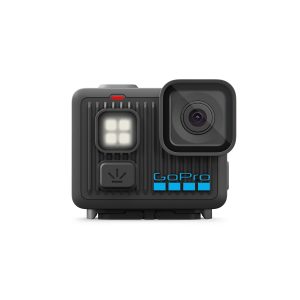
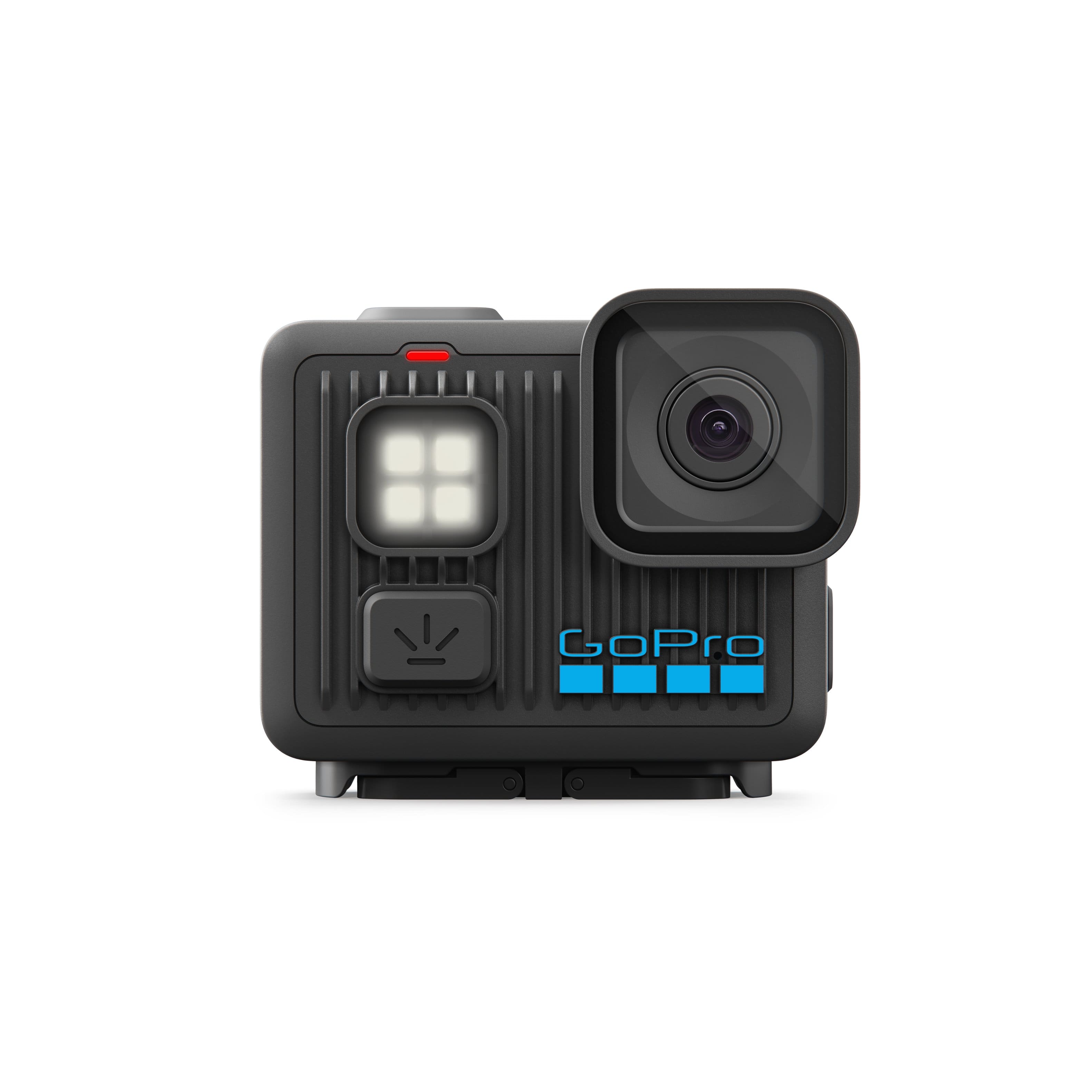
The GoPro HERO LIT sits strategically in GoPro’s lineup as an accessible entry point into their ecosystem. It’s not the flagship model, but it incorporates technology trickled down from more expensive counterparts, particularly the HyperSmooth stabilization system. What makes this positioning interesting is that you’re getting core GoPro functionality without paying for features that many casual users never touch.
Having unboxed and handled the camera, the first impression is familiar GoPro build quality—densely packed, waterproof without a separate housing, and reassuringly solid. The included accessories (light diffuser, mounts) suggest GoPro understands this camera will likely be someone’s first action camera, providing just enough to get started without overwhelming options.
| Specification | Details |
|---|---|
| Video Resolution | 4K Ultra HD |
| Photo Resolution | 12MP (8MP stills from video) |
| Stabilization | HyperSmooth electronic stabilization |
| Slow Motion | 2x slow-motion capability |
| Waterproof | Built-in, no housing required |
| Battery Life | ~60 minutes continuous 4K recording |
| Voice Control | Hands-free command recognition |
| Connectivity | Wi-Fi, Bluetooth, USB-C |
| App Integration | GoPro Quik for editing & sharing |
Real-World Performance & Feature Analysis
Design & Build Quality
Sliding the HERO LIT out of the box, the first thing you notice is how much it feels like a proper GoPro—just slightly simplified. The buttons have satisfying tactile feedback, the USB-C port cover seals securely, and the overall construction feels durable enough to survive typical adventures. Compared to budget action cameras that often feel hollow or plasticky, the HERO LIT maintains GoPro’s reputation for solid engineering.
The most significant design choice is the non-removable lens cover. Unlike premium GoPros where you can replace scratched lenses, this model has a fixed protective lens. For casual users, this is one less thing to worry about. But if you’re frequently in sandy or abrasive environments, a single scratch could necessitate professional repair. I found myself being more cautious with lens-down placements than I would with a replaceable-lens model.
Performance in Real Use
I tested the HERO LIT across three realistic scenarios: mountain biking on technical singletrack, kayaking in choppy coastal conditions, and capturing family activities at a busy park. The stabilization performance varied noticeably between these environments.
On the mountain bike, HyperSmooth effectively eliminated high-frequency vibration from handlebars and small trail bumps. The footage looked remarkably steady—until I hit a significant drop. The stabilization has clear limits with sudden, high-impact movements, where you’ll still see noticeable jolts. For trail riding and moderate downhill, it’s excellent. For serious mountain biking with big jumps, you’d want the more advanced stabilization of a flagship model.
Kayaking revealed the voice control’s strengths and limitations. With hands occupied paddling, being able to shout “GoPro, start recording” was genuinely useful. The camera recognized commands about 80% of the time in moderate wind conditions. However, in stronger winds or heavy water noise, recognition dropped significantly. This isn’t a criticism—it’s physics—but it’s important to understand that voice control is a convenience feature, not a reliability feature.
The 60-minute battery life claim proved accurate in my testing with 4K recording. This sounds sufficient until you realize how quickly an hour passes during an adventure. If you’re planning a full day of skiing or a multi-hour hike, you’ll absolutely need spare batteries or a power bank. The camera does charge reasonably quickly via USB-C (about 90 minutes for a full charge), making midday top-ups feasible.
Ease of Use
Where the HERO LIT truly shines is in its accessibility. The interface is simplified compared to pro models, with fewer menus and settings to navigate. For beginners or those who just want to press record and get good results, this is a significant advantage. The physical controls are intuitive—power, record, and mode selection are all easily accessible even with gloves on.
The Quik app automation is a double-edged sword. For casual users who hate editing, the automatic highlight reels the app creates are magical. It identifies key moments, adds music, and creates shareable videos with minimal effort. But for creators who want precise control over editing, pacing, and music selection, the automation can feel limiting. You can still manually edit footage, but the app is clearly optimized for quick social sharing rather than meticulous production.
Durability & Reliability
After several weeks of testing that included accidental drops onto hardpacked trail, splashing saltwater exposure, and temperature variations, the HERO LIT showed no signs of performance degradation. The waterproofing held perfectly through repeated submersion, and the buttons remained responsive. GoPro’s build quality reputation appears well-deserved even at this price point.
The mounting system compatibility is crucial. Since the HERO LIT uses the standard GoPro mount ecosystem, you have access to hundreds of third-party accessories. This is a significant advantage over budget cameras with proprietary mounts. I tested it with chest mounts, helmet mounts, and handlebar mounts from various manufacturers—all worked flawlessly.
Pros & Cons
What works exceptionally well:
- Stabilization-to-price ratio: HyperSmooth performs far better than anything else in this price category
- Out-of-box readiness: Includes essential mounts and is waterproof without additional purchases
- Voice control reliability: Works well in moderate noise environments when hands-free operation is crucial
- Quik app integration: Streamlines the editing-to-sharing workflow for social media content
- Build quality: Maintains GoPro’s reputation for durability despite the lower price point
Where compromises are evident:
- Battery limitations: 60-minute runtime necessitates carrying spares for extended use
- Fixed lens design: No replaceable lens protection for high-risk environments
- Limited manual controls: Advanced users will miss fine-tuning options for color, audio, and exposure
- No high-frame-rate options: 2x slow motion is sufficient for most but limiting for creative filming
- Audio quality: Built-in microphone is adequate but struggles with wind noise compared to models with external mic support
Comparison & Alternatives
Cheaper Alternative: AKASO Brave 7 LE (~$120)
The AKASO represents the budget category where the HERO LIT’s value becomes clear. While the Brave 7 LE offers similar specs on paper, the stabilization is noticeably inferior in real-world use. The electronic image stabilization (EIS) creates noticeable jelly effects during movement and struggles with vibration. The AKASO also uses a proprietary mounting system, limiting accessory options. Choose the AKASO if: budget is your absolute primary concern and you’re willing to accept significant stabilization compromises.
Premium Alternative: GoPro HERO12 Black (~$400)
The flagship HERO12 demonstrates where the extra investment goes: significantly better stabilization (HyperSmooth 6.0), much longer battery life, 5.3K video, 10-bit color for professional grading, GPS integration, and replaceable lens covers. The performance gap is most noticeable in extreme conditions—the HERO12 handles hard impacts and rapid direction changes that overwhelm the HERO LIT’s stabilization. Upgrade to HERO12 if: you’re creating professional content, need maximum stabilization for extreme sports, or require advanced manual controls.
The HERO LIT occupies a sweet spot between these extremes, offering genuine GoPro stabilization and build quality at a price that’s accessible to casual users who still demand quality results.
Buying Guide / Who Should Buy
Best for beginners: If you’re new to action cameras, the HERO LIT is arguably the ideal starting point. The simplified interface reduces the learning curve, the included accessories mean you can start shooting immediately, and the automated Quik app handles the intimidating editing process. You’re getting core GoPro quality without paying for features you might never use.
Best for professionals: Professional creators should look to the HERO12 or beyond. The HERO LIT lacks the color depth, audio inputs, and advanced stabilization needed for commercial work. However, it could serve as an excellent B-camera or crash-cam where risking an expensive flagship isn’t practical.
Not recommended for: Extreme sports athletes who regularly subject cameras to high-impact landings, filmmakers requiring professional color grading capabilities, or anyone needing all-day battery life without access to charging. The HERO LIT is designed for moderate use, not professional abuse.
Frequently Asked Questions
How does the HERO LIT compare to older GoPro models like the HERO9?
The HERO LIT typically offers better stabilization than models older than HERO10 but may lack some features like front screens or higher frame rates. It represents a modernization of entry-level offerings with current-generation stabilization technology.
Is the waterproof rating sufficient for scuba diving?
No, the built-in waterproofing is designed for surface water sports and rain. For scuba diving, you’d need a proper housing, which isn’t available for this model. Stick to snorkeling and surface activities.
Can I use my existing GoPro mounts with the HERO LIT?
Yes, completely compatible with the standard GoPro mounting ecosystem. This is a significant advantage over budget brands with proprietary systems.
How reliable is the “automatic highlight video” feature?
It works surprisingly well for identifying action moments and creating shareable clips. However, the algorithm sometimes misses subtle highlights, so don’t rely on it exclusively for important footage review.
Is the HERO LIT worth the premium over budget action cameras?
If stabilization quality matters to you, absolutely. The difference in video smoothness is immediately apparent and worth the price difference for most users who actually watch their footage.
Bottom line: The GoPro HERO LIT delivers where it matters most—stabilization and ease of use—while making sensible compromises to hit an accessible price point. For the majority of users who want reliable, good-looking action footage without a steep learning curve or budget, it represents one of the best values in the action camera market today.