Table of Contents
You’re hiking up a trail, camera bouncing against your chest with every step. The strap digs into your neck, the adjustment mechanism keeps slipping, and you’re constantly worrying about whether those plastic connectors will actually hold your $2,000 camera setup. Sound familiar? Most camera straps are an afterthought – until they become a problem.
I’ve used the Peak Design Slide Lite camera strap across three continents, from humid jungle hikes to crowded city streets, with everything from compact mirrorless bodies to full-frame cameras with substantial lenses. After putting hundreds of miles on this strap, I can tell you exactly where it excels, where it falls short, and whether it’s the right solution for your photography needs.
Key Takeaways
- The Anchor Link system genuinely transforms how you switch between cameras and carrying styles
- Excellent balance between comfort and packability for mirrorless systems
- The $68.55 price point puts it in premium territory – worth it for active photographers
- Not ideal for heavy DSLR setups or photographers who prefer neck-only carry
- Superior to cheap alternatives but faces stiff competition from brands like BlackRapid
Quick Verdict
Best for: Travel photographers, mirrorless camera users, anyone needing quick camera access in dynamic environments. The Peak Design Slide Lite camera strap delivers exceptional versatility and security for its weight class.
Not ideal for: Heavy DSLR setups with large telephoto lenses, photographers who exclusively use neck carry, or those on a tight budget.
Core strengths: The innovative Anchor Link system, thoughtful material selection that prevents slippage, and excellent packability make this stand out from generic straps.
Core weaknesses: Limited padding for heavier setups, premium pricing, and the learning curve for proper Anchor Link installation.
Product Overview & Specifications
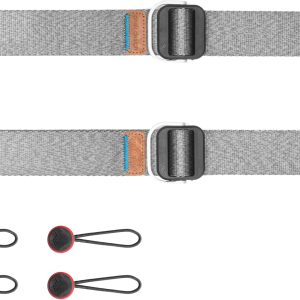
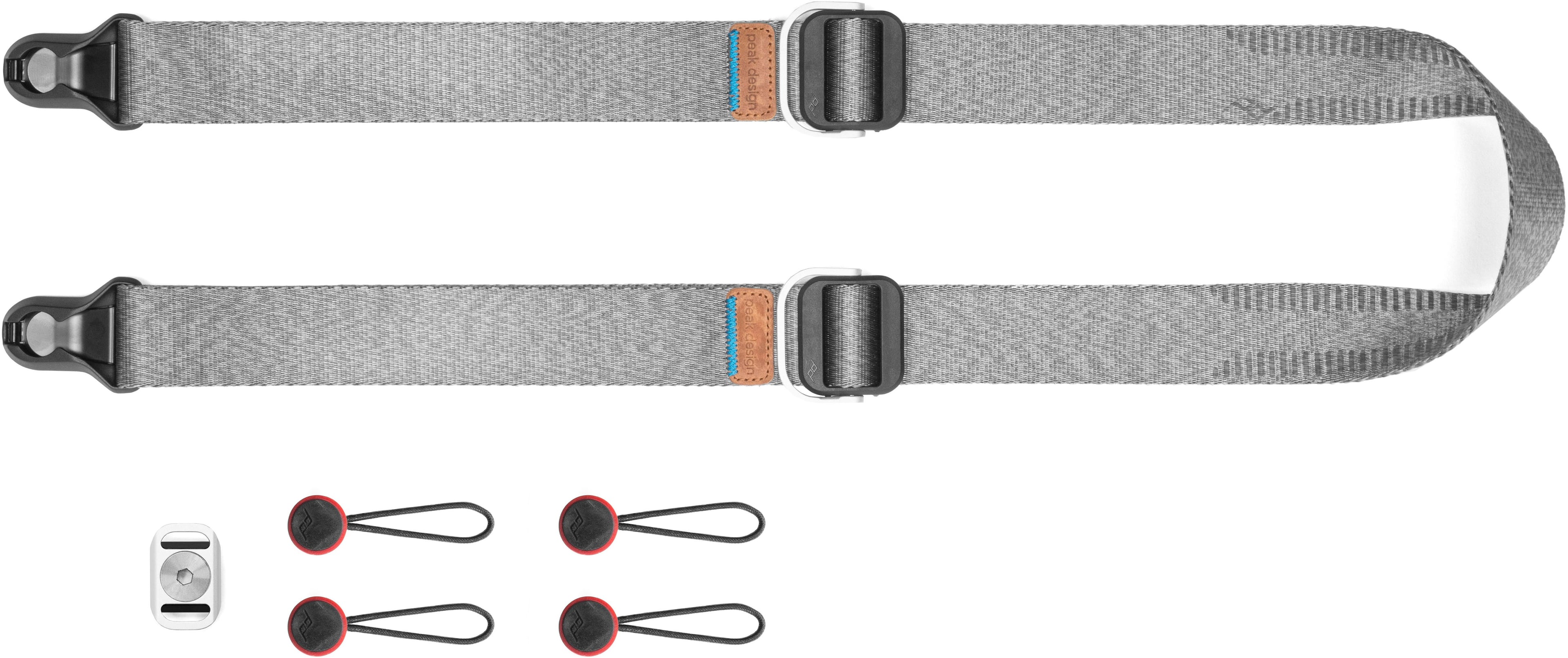
The Peak Design Slide Lite camera strap sits in that sweet spot between minimalistic neck straps and bulky shoulder systems. At first glance, it looks like any other well-made camera strap, but the magic lies in the details – the dual-texture webbing, the precision-machined aluminum hardware, and of course, the revolutionary Anchor Link system that lets you securely attach and detach your camera in seconds.
| Specification | Details |
|---|---|
| Length Range | 39 to 57.1 inches (adjustable) |
| Weight Capacity | 200 lbs per anchor (90 kg) |
| Material | Aluminum hardware, nylon webbing |
| Carry Options | Sling, neck, shoulder |
| Compatibility | Mirrorless, DSLR, compact cameras |
| Included Accessories | Anchor Links (4), hex wrench, storage pouch |
What these specifications don’t tell you is how these numbers translate to real-world use. The 39-57.1 inch range, for instance, means you can comfortably wear this cross-body with a winter coat or use it as a shorter neck strap in warmer conditions. The aluminum hardware feels substantial in hand – no plastic creaking or questionable durability here.
Real-World Performance & Feature Analysis
Design & Build Quality
Peak Design’s attention to detail immediately stands out. The webbing features a smooth side that glides easily over clothing and a grippy silicone-treated side that stays put on your shoulder. This dual-texture approach sounds simple but makes a dramatic difference during long shooting sessions.
The adjustment sliders move with satisfying precision – no cheap plastic components that wear out over time. However, I found the adjustment mechanism requires two hands for quick changes, which can be frustrating when you’re trying to switch carrying styles on the fly. The included Anchor Links feel incredibly secure, though the installation process has a learning curve that I’ll discuss later.
Performance in Real Use
Let me paint two real scenarios where the Slide Lite camera strap either shined or showed limitations:
Scenario 1: Travel Photography in Tokyo – Carrying my Sony A7IV with 24-70mm f/2.8, I used the Slide Lite primarily as a sling strap. The quick-adjust functionality allowed me to swiftly transition from carrying at my side to bringing the camera to my eye. The grippy side kept the strap securely on my shoulder even when moving through crowded stations. After 10+ hours of walking, the thin padding started to feel inadequate, but the distributed weight was still manageable.
Scenario 2: Landscape Photography in Rocky Mountains – With a heavier Nikon Z8 and 70-200mm f/2.8, the Slide Lite struggled during long hikes. The thin profile dug into my shoulder during steep ascents, and I found myself wishing for the more substantial padding of the regular Slide model. The security of the Anchor Links, however, gave me complete confidence when scrambling over rough terrain.
The adjustable camera strap mechanism works beautifully for fine-tuning length, but the lack of quick-release buckles means you can’t rapidly switch between dramatically different carrying configurations.
Ease of Use
The Anchor Link system is both the Slide Lite’s greatest feature and its most confusing aspect for new users. Installing the anchors requires carefully following the instructions – I’ve seen photographers improperly install them, creating potential failure points. Once correctly installed, though, the system is brilliant. Being able to detach your camera completely in two seconds makes transferring between tripod, handheld, and different straps seamless.
The strap adjustment uses a clever sliding mechanism that’s secure once set, but I found it less intuitive than traditional buckle systems. It takes some practice to adjust quickly while wearing the strap.
Durability & Reliability
After six months of regular use, my Slide Lite shows minimal wear. The webbing maintains its structure, the stitching remains perfect, and the hardware shows only minor scratching. The anchors themselves have been tested to extreme standards – Peak Design claims 200+ lbs capacity per anchor, and I’ve never had reason to doubt this.
The only durability concern I’ve encountered involves the anchor attachment points on the camera itself. If you frequently switch anchors between different cameras, the small plastic covers on camera lugs can wear over time. This isn’t a fault of the strap design but rather a consideration for photographers with multiple bodies.
Pros & Cons
What works exceptionally well:
- Anchor Link system provides unmatched flexibility for camera attachment and removal
- Dual-texture webbing genuinely prevents slippage without sacrificing comfort
- Compact packaging makes it easy to store when not needed
- Multiple carry options adapt to different shooting scenarios
- Premium materials justify the price for serious photographers
Where it falls short:
- Limited padding becomes noticeable with heavier camera setups
- Premium pricing at $68.55 puts it out of reach for casual photographers
- Learning curve for proper Anchor Link installation and adjustment
- Not ideal for neck-only carry due to thinner padding compared to dedicated neck straps
Comparison & Alternatives
Cheaper Alternative: OP/TECH USA Classic Strap (~$15)
The OP/TECH system offers decent comfort with its neoprene padding and quick-connect system at a fraction of the price. Where it falls short: the connectors feel less secure, the materials aren’t as durable long-term, and you lose the quick-adjust functionality. Choose this if you’re on a tight budget or only occasionally use a strap.
Premium Alternative: BlackRapid Sport Breathe (~$80)
BlackRapid specializes in sling-style carrying with superior padding and ergonomics. The Slide Lite can’t match the comfort of the Sport Breathe for heavy gear, but it offers more carrying versatility. Choose BlackRapid if you primarily carry heavy DSLR setups and want maximum comfort for extended wear.
The Peak Design Slide Lite camera strap occupies a unique middle ground – more versatile than dedicated sling straps, more comfortable than minimalist straps, and more feature-rich than basic neck straps.
Buying Guide / Who Should Buy
Best for beginners: If you’re new to photography but plan to invest in your gear over time, the Slide Lite grows with your system. The ability to use the same strap across different cameras and carrying styles makes it a solid long-term investment.
Best for professionals: Working photographers who switch between multiple cameras will appreciate the Anchor Link system. The time saved swapping cameras alone can justify the cost over time.
Not recommended for: Photographers using heavy DSLR bodies with large telephoto lenses should consider the regular Peak Design Slide or dedicated sling systems with more substantial padding. Also not ideal for photographers who exclusively prefer traditional neck carry – the thinner padding provides less comfort than dedicated neck straps.
FAQ
Is the Peak Design Slide Lite worth $68.55?
For photographers who regularly use their cameras in dynamic environments and value quick access, absolutely. The build quality, versatility, and security justify the price. For casual photographers who rarely use straps, cheaper alternatives might suffice.
How secure are the Anchor Links really?
Extremely secure when properly installed. I’ve carried professional gear worth thousands of dollars without hesitation. The key is following installation instructions carefully – improper installation is the only real failure point I’ve observed.
Can it handle a full-frame camera with 70-200mm lens?
Yes, but comfort becomes marginal during extended carry. The weight capacity is sufficient, but the thin padding means you’ll feel the weight after several hours. For heavy setups, consider the regular Slide model.
How does it compare to the regular Peak Design Slide?
The Slide Lite is narrower (¾” vs 1” webbing) and has less padding, making it better for mirrorless cameras and packability. The regular Slide offers superior comfort for heavy DSLR setups but bulkier storage.
What’s the actual difference in daily use between this and a $20 strap?
The ability to quickly remove your camera completely, the security of knowing your connections won’t fail, the comfort of materials that don’t dig into your skin, and the versatility to adapt to different shooting scenarios. These differences become apparent within the first week of regular use.